
Pixels
A Sensory Exploration
Where pixels become living matter
An extraordinary solo show by digital art pioneer Miguel Chevalier, transforming generative AI into ever-evolving installations that enchant all ages.
Synopsis
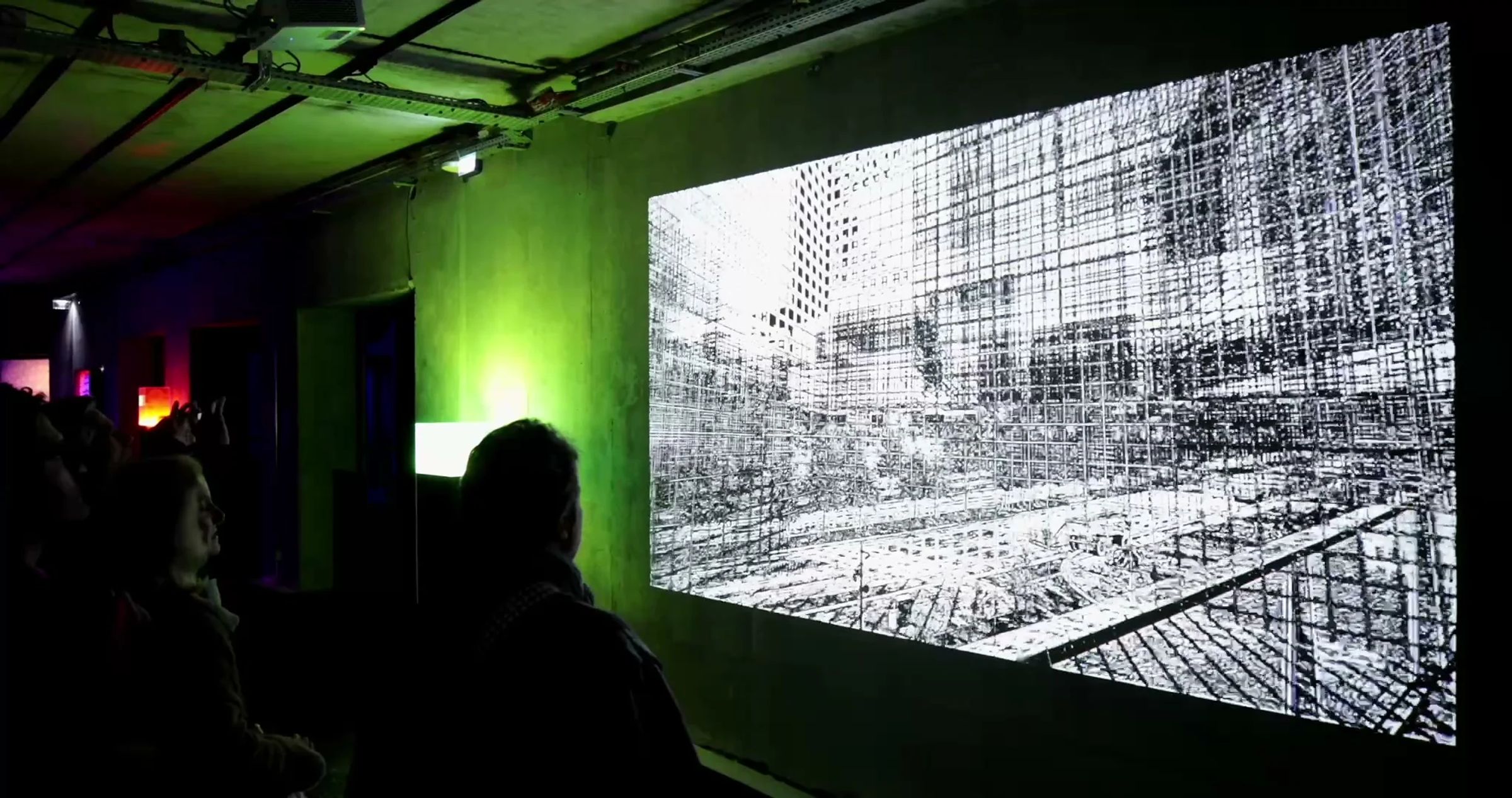
Informed by advances in artificial intelligence, Miguel Chevalier's works probe the nature of algorithmically generated imagery and the growing influence of technology on how we perceive the world.
At the intersection of art, science and technology, visitors move through dynamic landscapes of light, sound and colour, interacting with a universe where art is no longer fixed but continuously redefined by algorithms, robots and real-time computation. Original AI-enhanced musical compositions accompany key installations, weaving sound and image into a continuous, hypnotic and thoroughly futuristic dialogue.
The exhibition brings together generative and interactive installations, 3D-printed sculptures, previously unseen video works, and luminous totem-like pieces, all heightened by vivid colours and mirror effects.
Informations
- Requirement: Minimum 5 meters height
- Tailored scenography & curation by Miguel Chevalier's studio
- Original artworks display
- Large-scale interactive installation
- Generative soundtrack by Thomas Roussel
Coproduced with


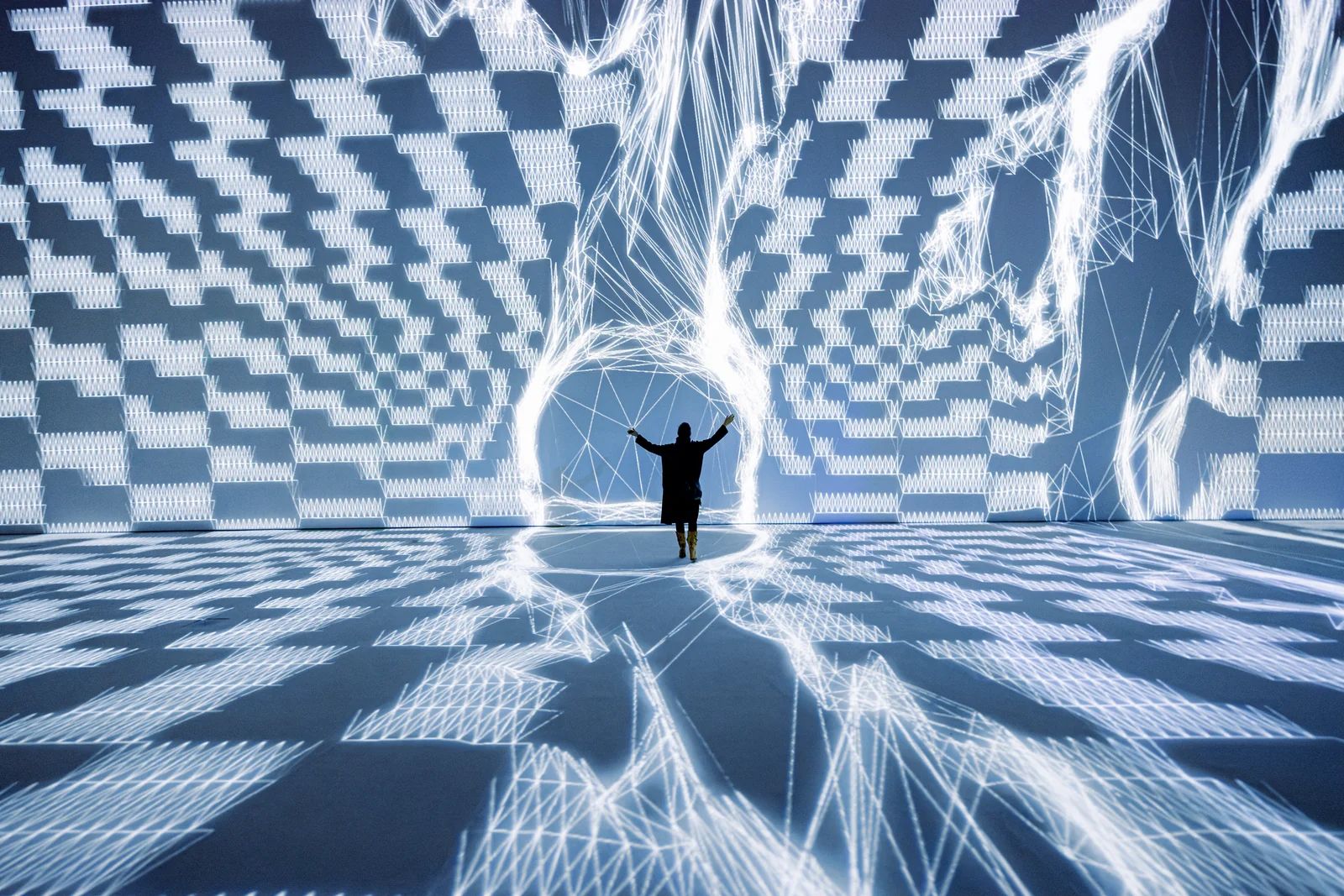
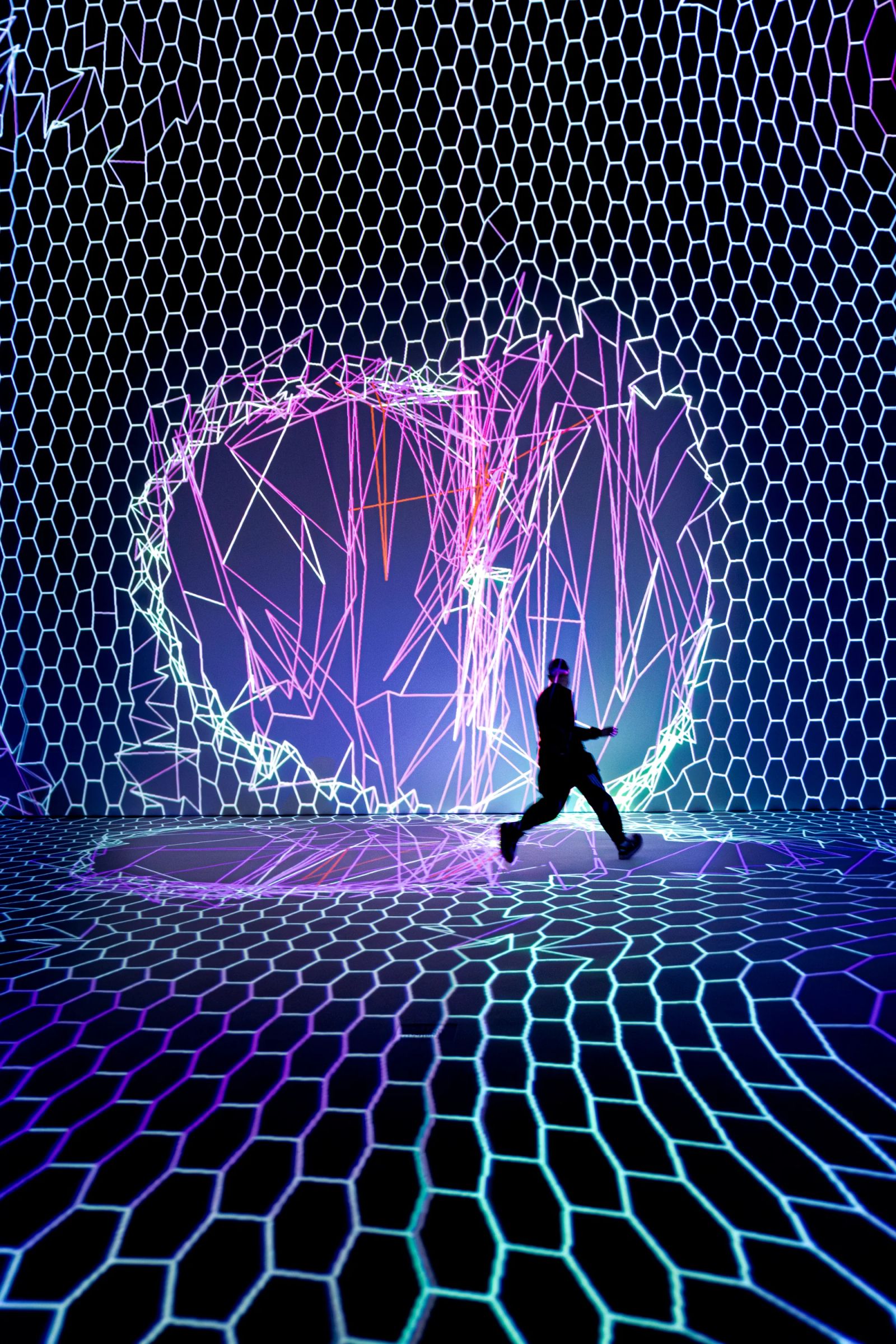
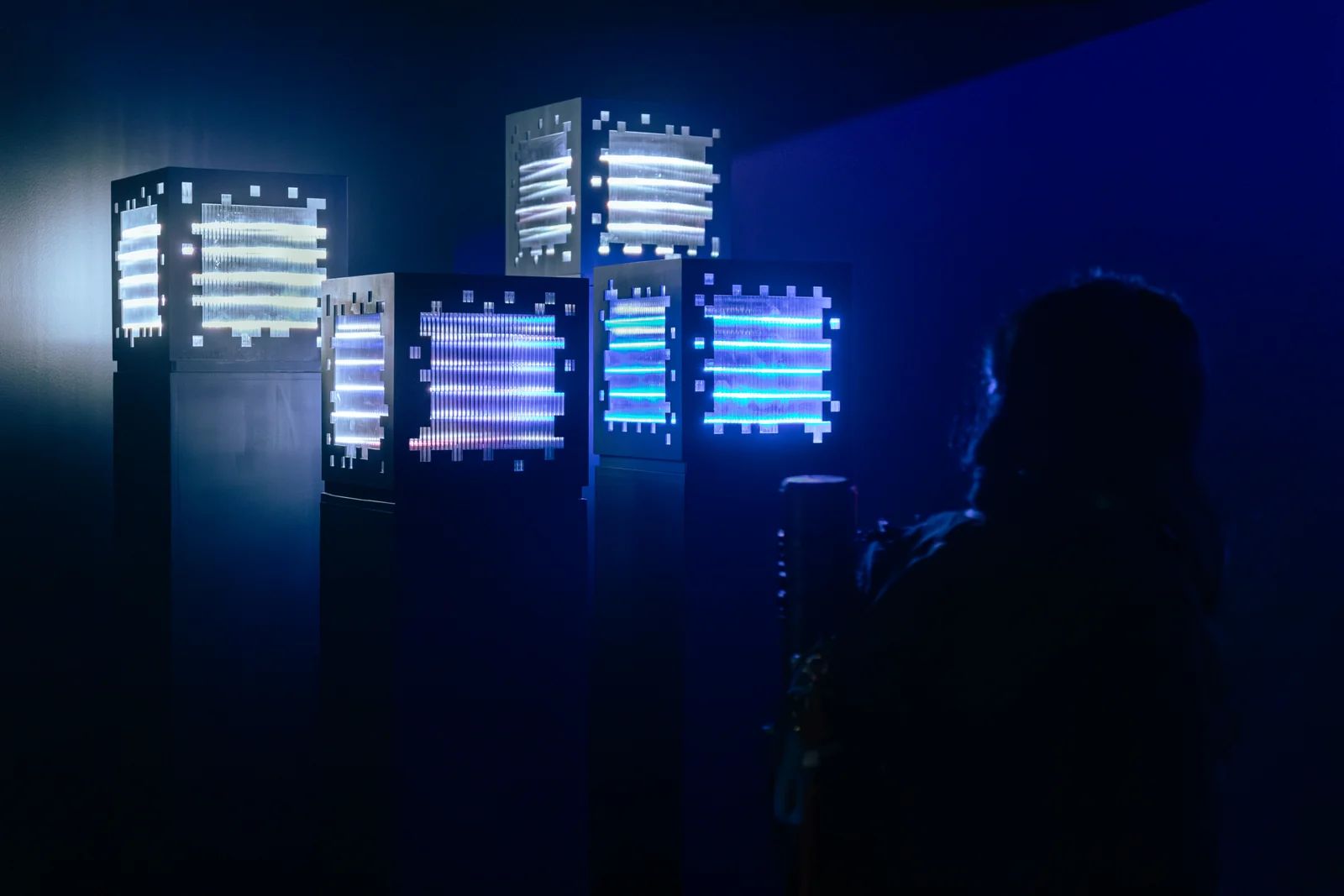
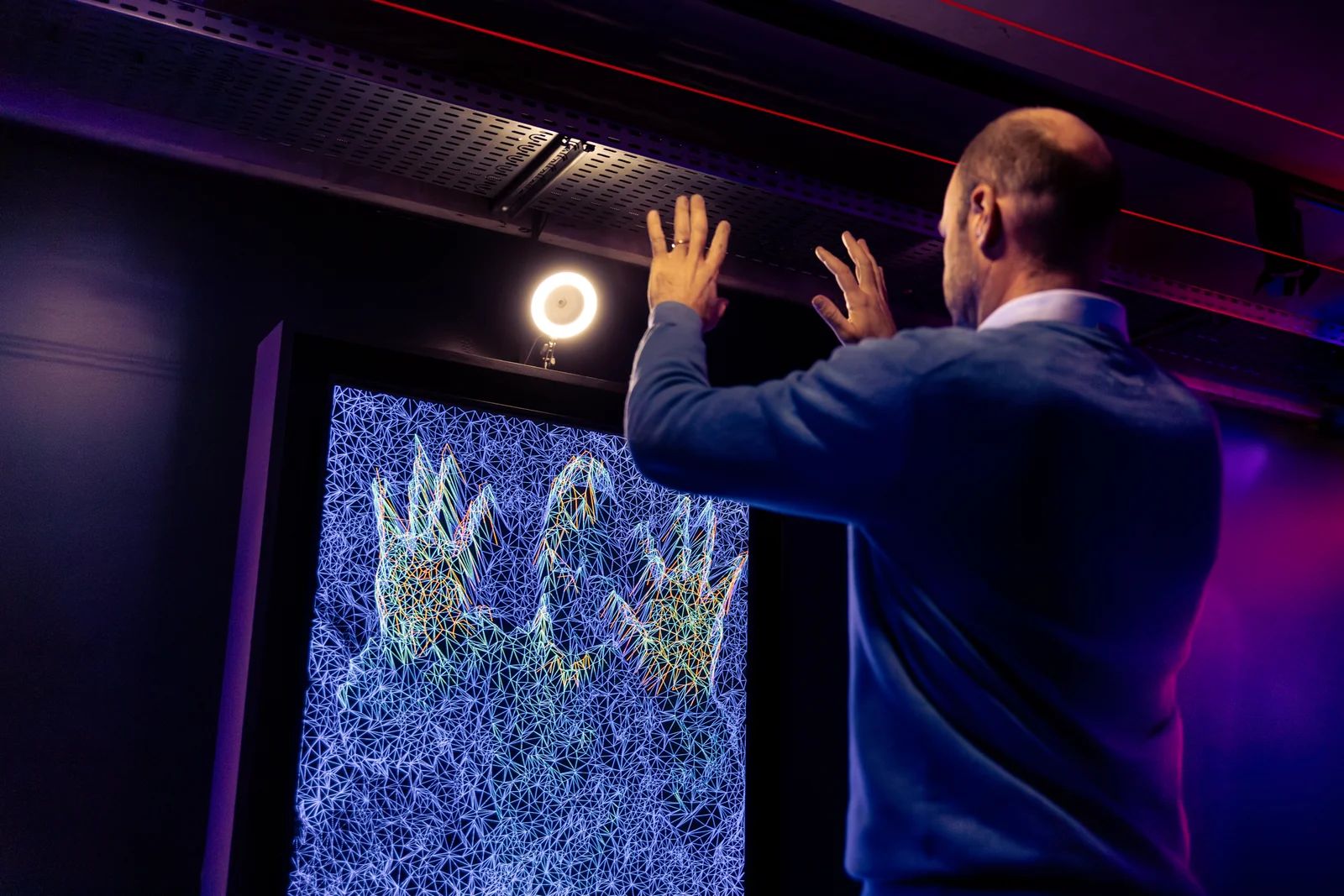
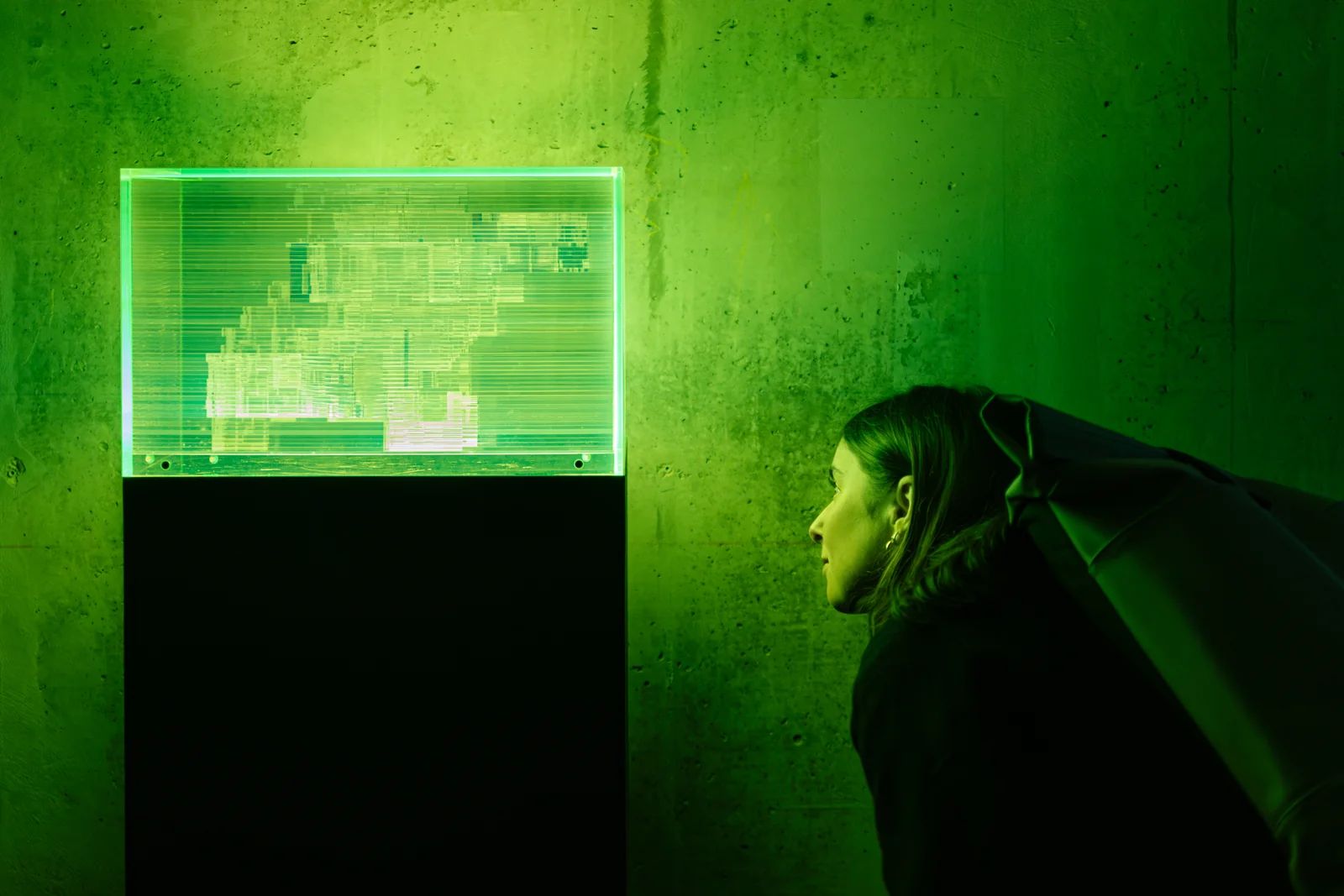
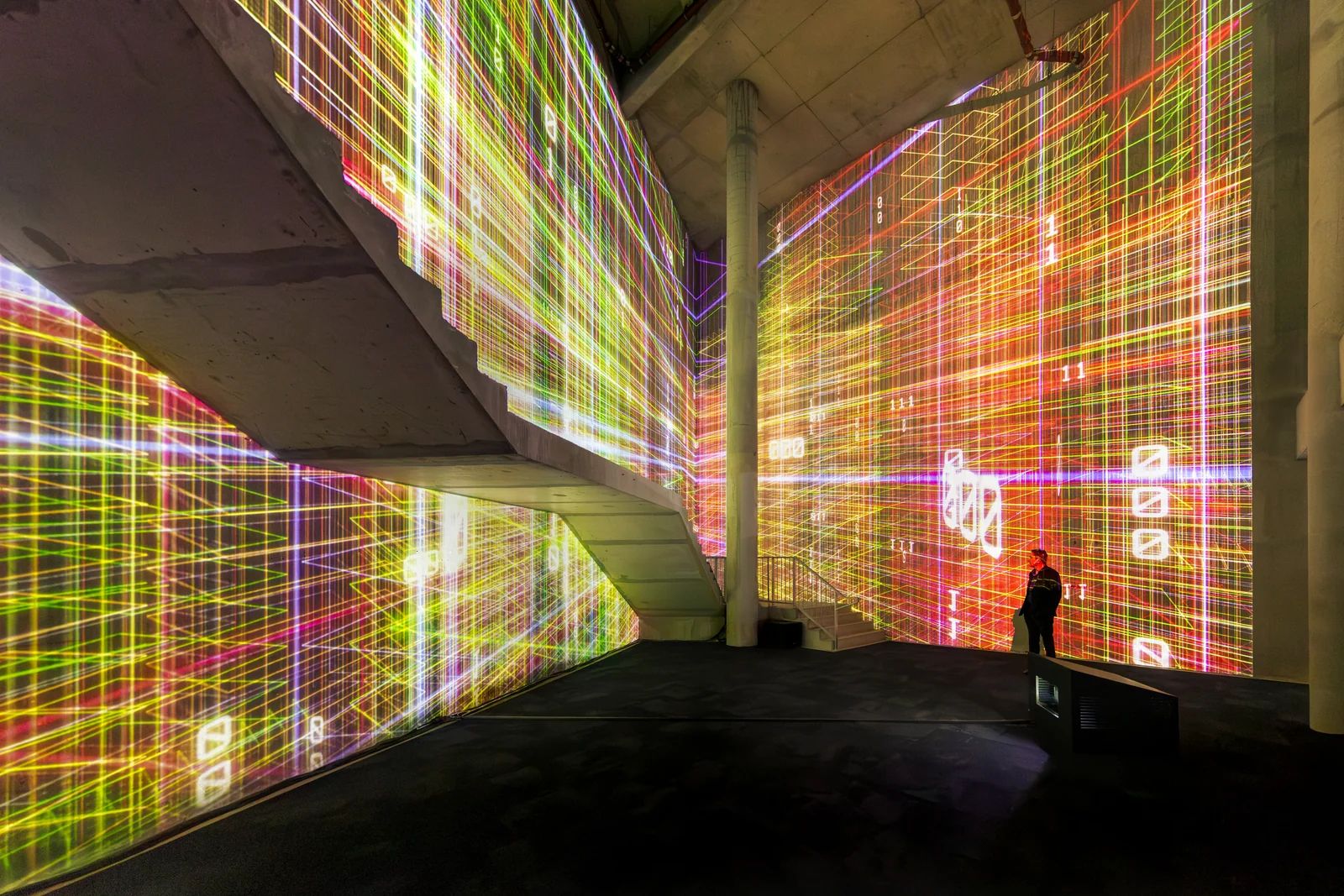
"The wandering journey invites visitors to cross the thresholds of an immaterial world, where a myriad of colours, forms, and sounds unfolds to give rise to a theatre of the unexpected."
About our partners
Voxels Productions is a production company specialising in digital art. With over 10 years of experience and strong technical expertise, Voxels Productions oversees the realisation of technology-driven artistic creations, from inception through to exhibition.
Grand Palais Immersif designs and produces immersive exhibitions that combine scientific rigour, artistic creation, and technological innovation to deliver unique cultural experiences.
Founded by Grand Palais RMN, the Caisse des Dépôts as part of France 2030, and VINCI Immobilier, Grand Palais Immersif emerged from a shared ambition. Developed in Paris around its venue on Place de la Bastille, it quickly established itself as a pioneer in immersive experiences, recognised for the scientific and artistic quality of its exhibitions.
In 2024, Chargeurs Museum Studio - a leader in the design and production of cultural, museum, and immersive exhibitions - became the majority shareholder of Grand Palais Immersif alongside its founders, with the ambition of accelerating the international rollout of its exhibition catalogue through touring.
Credits
Curation - Miguel Chevalier and Voxels Studio Original soundtrack - Thomas Roussel Video - Thomas Granovsky Images - Quentin Chevrier
Q&A
Contact us?
A question? An exhibition project? Our team will get back to you with a customised proposal tailored to your venue and audience.
Contact us-
What does Museum Studio mean by hybrid exhibition? +
A hybrid exhibition, as we conceive it, goes beyond the traditional format: it draws the visitor into a sensitive narrative designed as a journey. The theatrical scenography gives space to each part of the story and engages the visitor through digital devices and unique artifacts that pace the exhibition. Sound, light, projection, interactivity: everything works together to heighten the senses and create an enveloping experience where the visitor is no longer merely looking, but fully engaged, physically and emotionally. The goal is to fundamentally renew the relationship between audiences and the exhibition subject.
-
How do your exhibitions differ from traditional ones? +
Where a traditional exhibition presents artworks in an informative, contemplative way, our exhibitions place the visitor at the centre of a fully designed environment. The narrative is enveloping, the journey is conceived as a total experience, and the approach to artworks and scholarly content is renewed. For institutions, this translates into greater appeal and the arrival of new audiences.
-
What is the level of scientific and curatorial validation of the exhibitions? +
Here is a summary of the answer: Each exhibition is co-developed with major partner institutions — the Louvre, the Réunion des Musées Nationaux – Grand Palais, the Mucha Foundation, the Civic Museums of Venice, and the Archaeological Park of Pompeii — which act as scientific and curatorial co-authors: they validate the content, contribute to the documentary and iconographic resources, and co-curate the exhibition. Thus, Meet Mona Lisa was developed with Vincent Delieuvin, Chief Curator of 16th Century Italian Painting at the Musée du Louvre, and Eternal Mucha with the Mucha Foundation, ensuring the scientific rigour of each production.
-
Are your exhibitions suitable for all audiences? +
Yes. Our catalogue covers a broad thematic range - from classical art to pop culture, history and heritage - allowing each institution to target specific audiences or broaden their visitor base. Playground Kids is specifically designed for young audiences. Tailored mediation tools can be developed to increase the relevance of each exhibition for your local audiences.
-
What kinds of immersive devices are used in the exhibitions? +
Each exhibition deploys a combination of devices tailored to its narrative: large-format video mapping, 360° immersive projection systems, spatial sound installations, interactive interfaces, augmented reality, digital mediation tools and 3.0 technologies. Every device is integrated into the scenography and the narrative journey, serving the story and the visitor experience.
-
Can the immersive devices be adapted to our existing technical infrastructure? +
Yes. Working alongside your local teams, and through technical and curatorial meetings, we will work with you to tailor the content to your venue and its specific requirements. We can take care of the exhibition design, or it can be carried out in-house, depending on your preferences and resources.
-
Can a touring exhibition be customised for a local context? +
Yes, within reason. While the core of each exhibition (narrative, scenography, devices) is set to preserve its artistic integrity, adaptations are possible: translation and localisation of content, addition of artefacts, and integration of educational modules tailored to the regional context.
-
Which institutions has Museum Studio already worked with? +
Museum Studio and The Travelling Collection have built partnerships with leading institutions: the Louvre, the Réunion des Musées Nationaux – Grand Palais, the Mucha Foundation, the Civic Museums of Venice and the Archaeological Park of Pompeii. This network guarantees the curatorial legitimacy and scientific quality of every production.
-
Can a host institution become a creation partner? +
Yes. Museum Studio is open to co-productions with institutions whose collections or thematic expertise align with the vision of The Travelling Collection. If you have a project or a collection that would like to transform into a touring exhibition, we would be delighted to discuss it with you.