
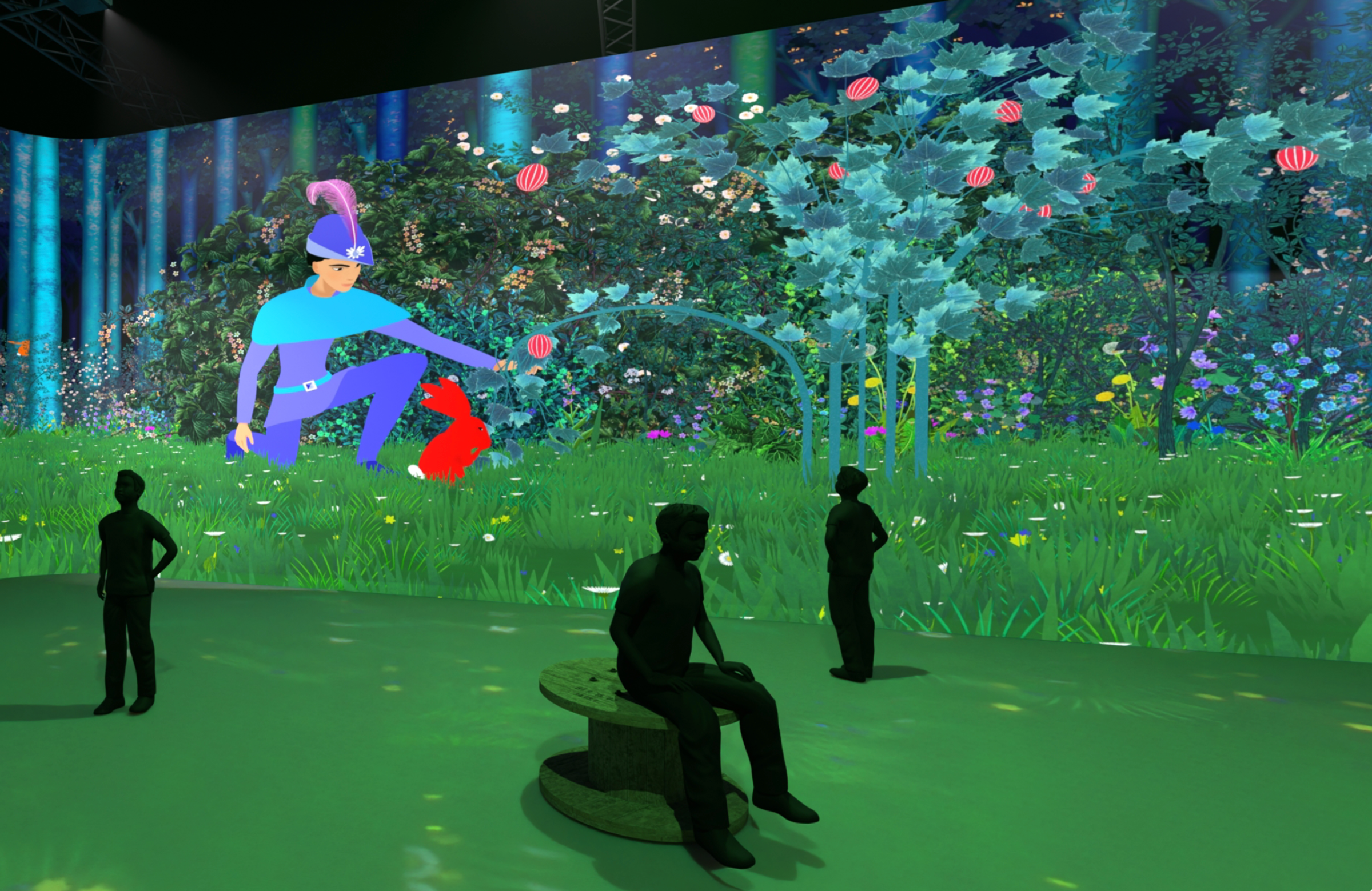
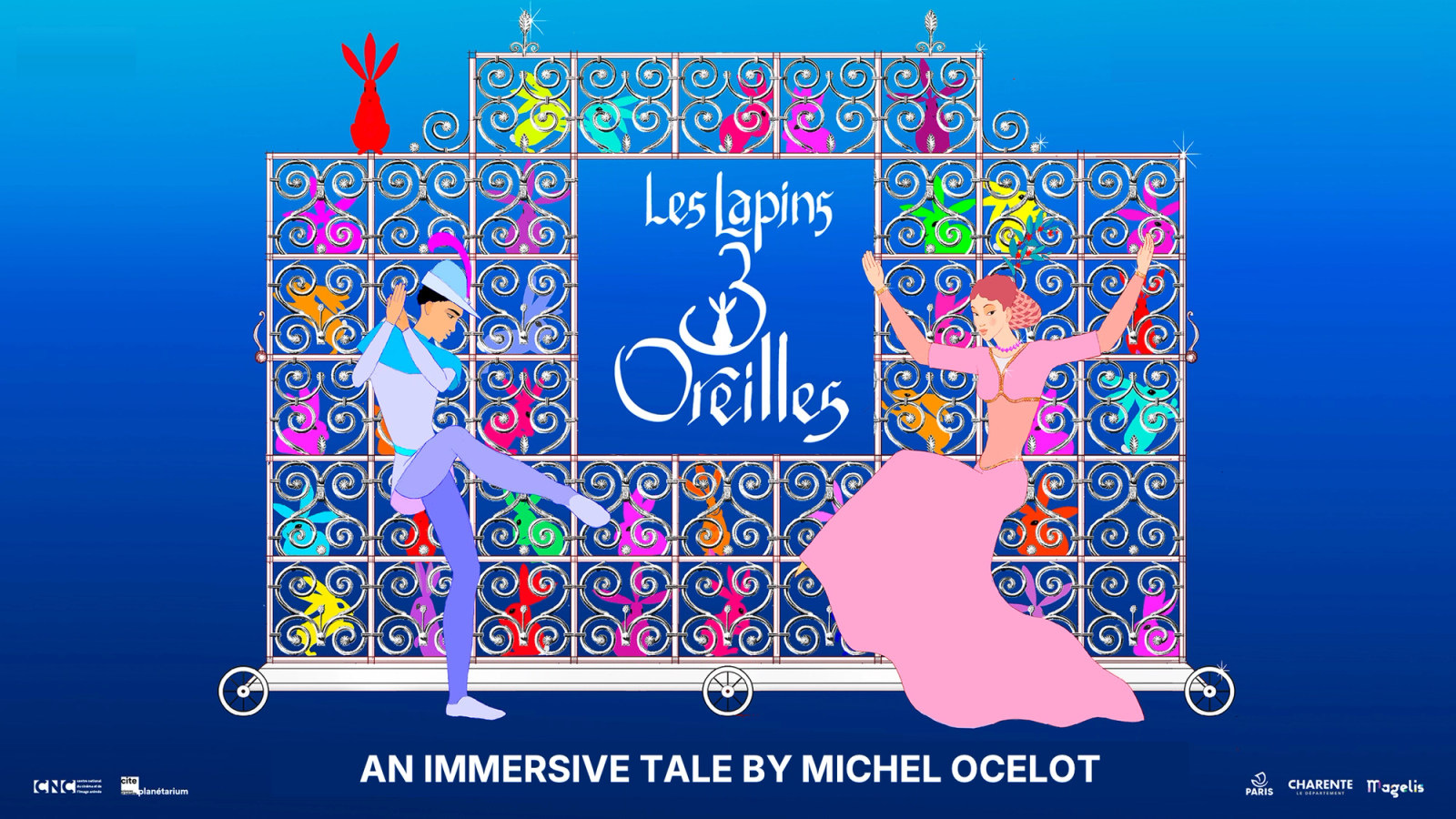
The Three-Eared Rabbits
An immersive and musical tale by Michel Ocelot
A narrative, family-friendly and playful experience in the wonderful world of Michel Ocelot
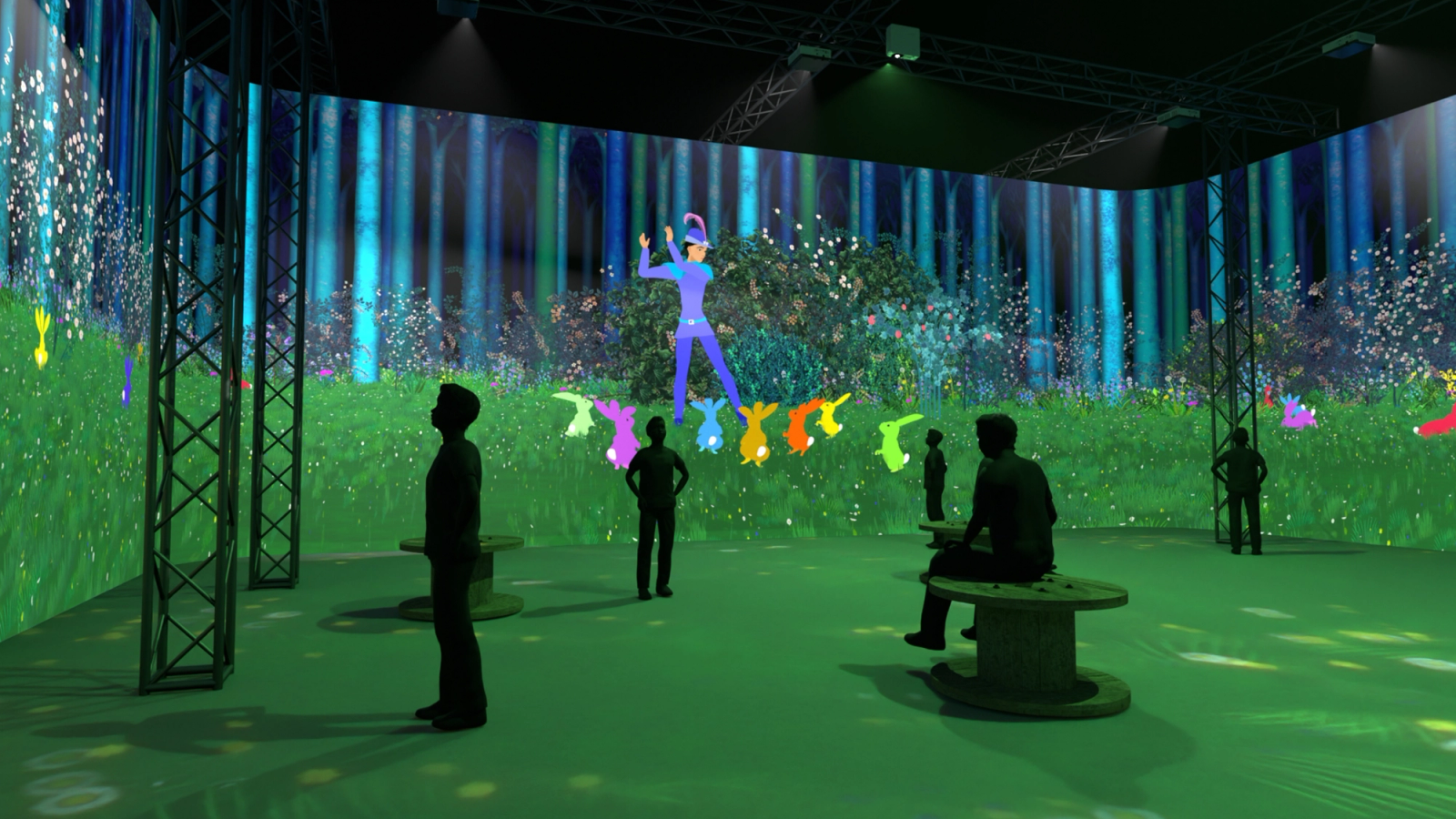
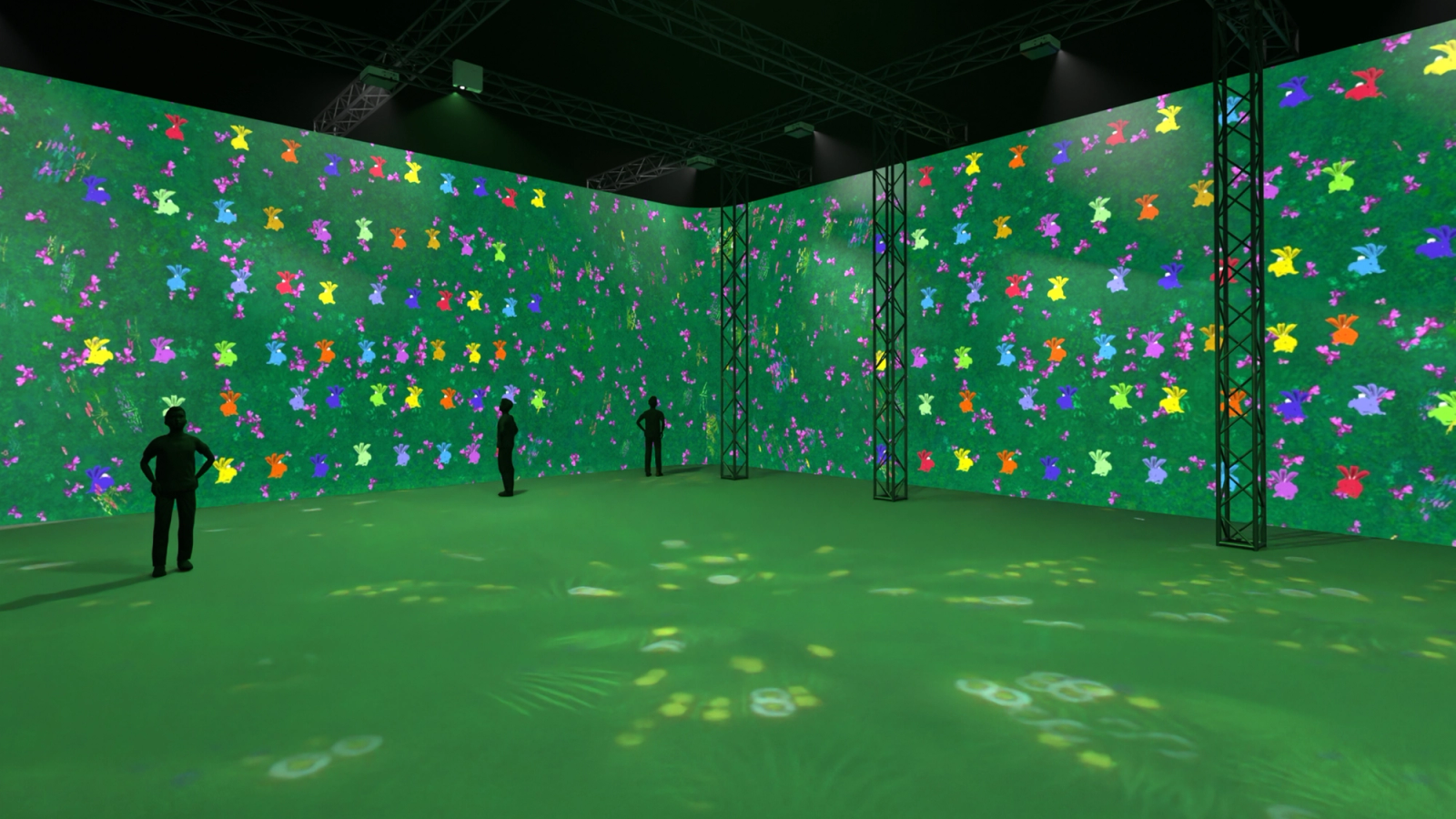
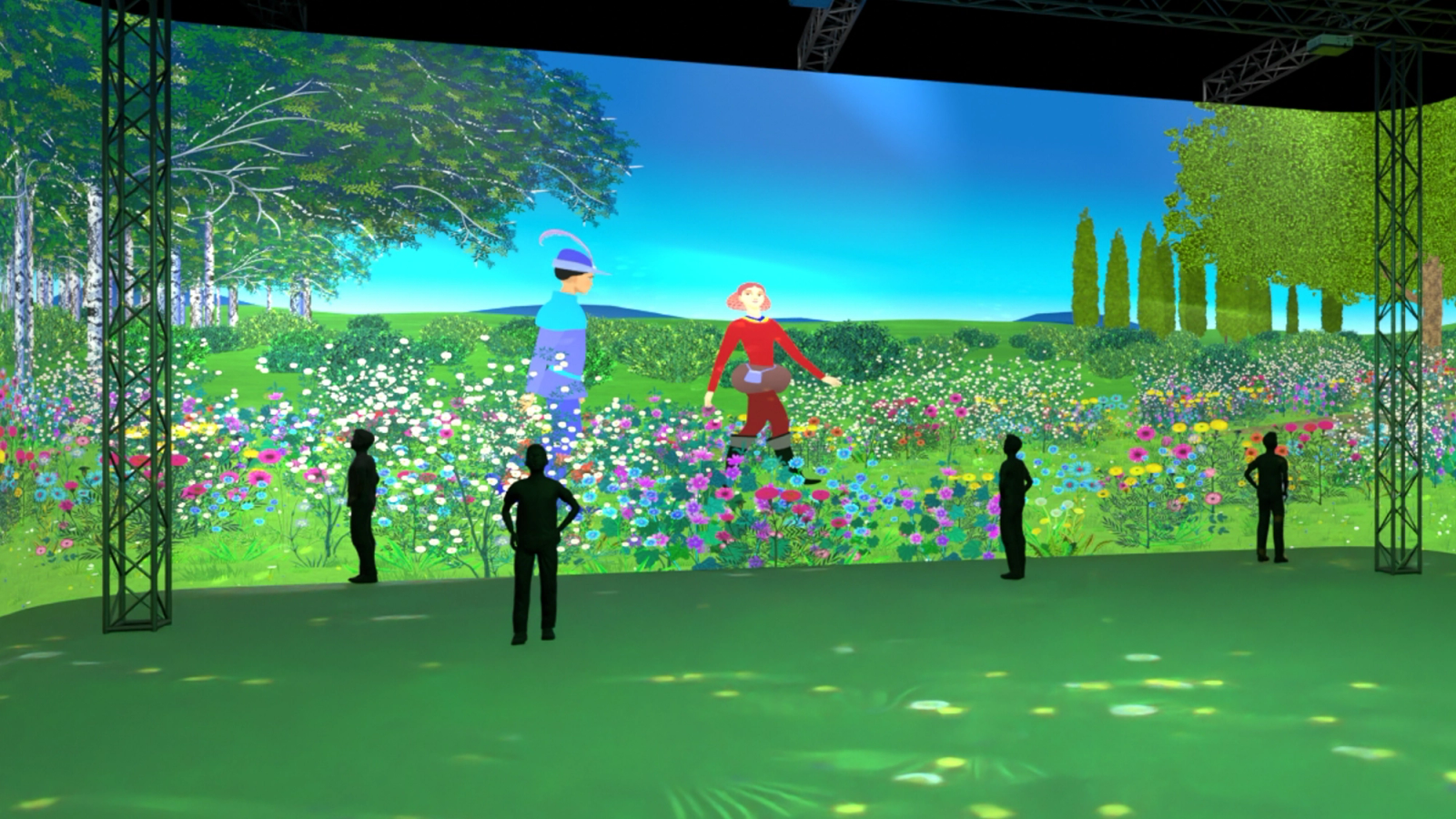
A family show that immerses children and adults alike in a tale filled with sumptuous scenery, where everyone can dance alongside dozens of rabbits.
Synopsis
A fairy tale set in a medieval kingdom, featuring a poor but generous Boy, an imprisoned Princess, a dreadful Regent, a frail old Man who holds the secret, a golden currant bush, and a great many Three-Eared Rabbits, music lovers, brightly coloured and excellent climbers. They are everywhere, in the grass and up in the trees.
Music is also fundamental, an essential ingredient for resolving the plot and pleasing both the rabbits’ three ears, and those of the audience!
Informations
- Minimum required height: 4 m
- Floor area: a near-square configuration is preferred, but dimensions can be adapted to the available space.
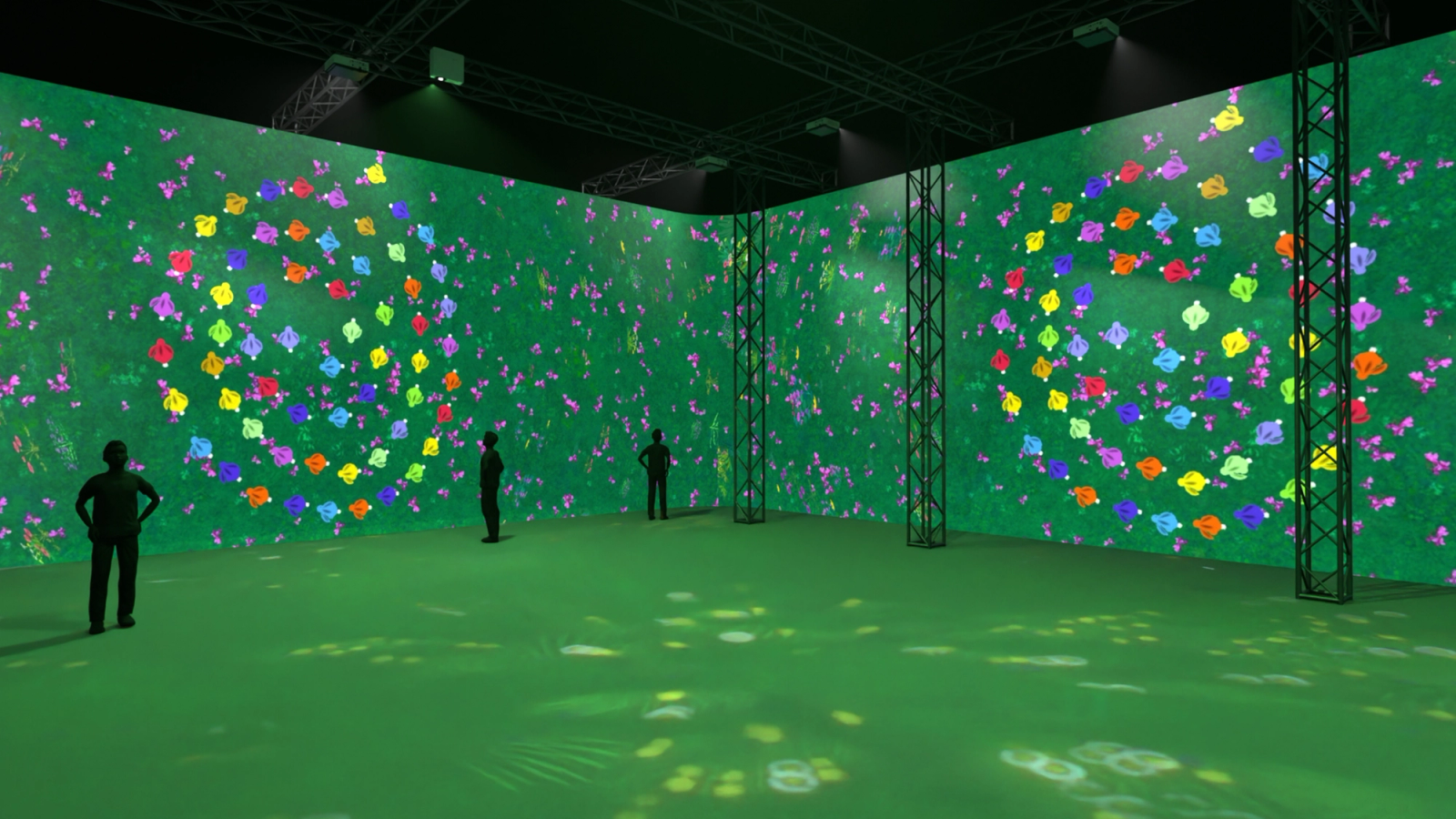
- 360° video mapping
- 3D Animation
- Spatialised music
- Dialogue-based narration
Coproduced with

About Michel Ocelot
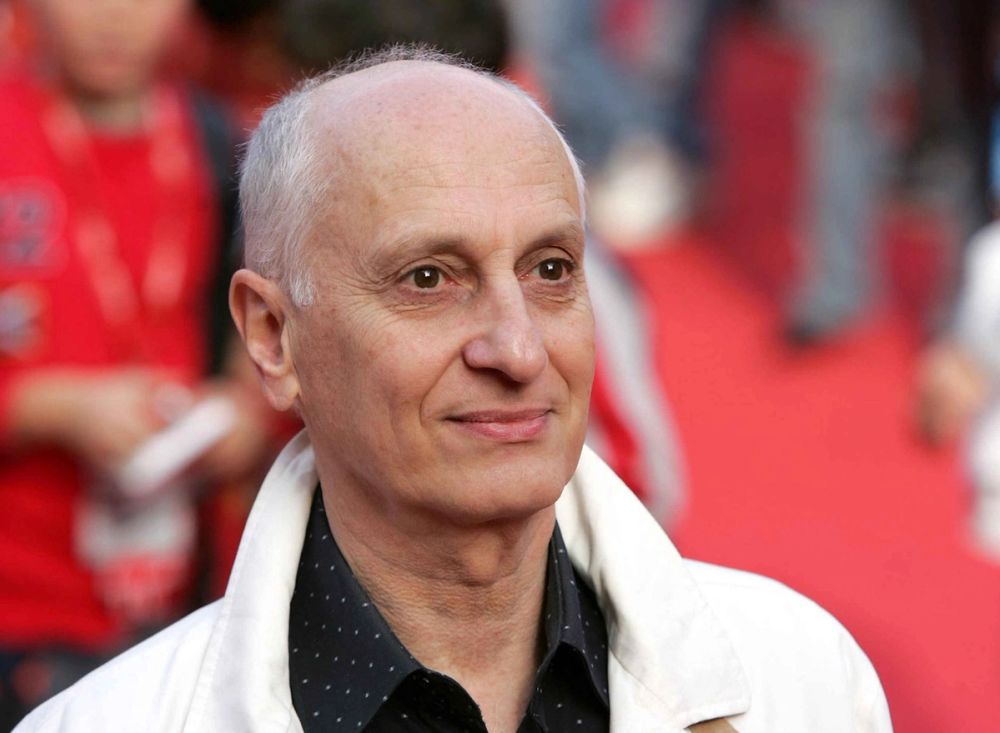
Michel Ocelot is one of the leading figures in French animated cinema, internationally recognised for his unique, poetic and instantly recognisable visual style.
The creator of "Kirikou and the Sorceress", which has become a classic of animation, he is also the director of major films such as "Princes and Princesses", "Azur and Asmar" and "Dilili in Paris". His work, inspired by fairy tales, the decorative arts and world cultures, is distinguished by its visual elegance and the richness of its compositions.
His career has been honoured with numerous prestigious awards, including a BAFTA, two Césars, the Grand Prix at the Annecy International Animation Film Festival for "Kirikou and the Sorceress", and the Prix Lumières for Best Animated Film for "Dilili in Paris".
Featured and celebrated at the world’s leading festivals, notably Cannes and Annecy, Michel Ocelot now occupies a prominent place in the history of French animation and the visual arts.
A distinctive artistic style, recognised both in France and internationally.
About our partners
Akaba is developing a catalog of original immersive works and adapting them for various immersive formats, while building on long-term collaborations with artists, studios, and distribution partners.
The company places the convergence of creators, science, and technology at the heart of its approach and editorial vision, with the aim of producing original works with strong visual universes, that can resonate with a wide audience.
Credits
Production – Akaba
Screenplay, art direction and direction – Michel Ocelot
Original music – Laurent Perez del Mar With the support of the National Centre for Cinema and the Moving Image (CNC) In partnership with the Planetarium at the Cité des sciences et de l’industrie in Paris With the support of Magelis and the Charente department With the support of the City of Paris
Q&A
Contact us?
A question? An exhibition project? Our team will get back to you with a customised proposal tailored to your venue and audience.
Contact us-
What does Museum Studio mean by hybrid exhibition? +
A hybrid exhibition, as we conceive it, goes beyond the traditional format: it draws the visitor into a sensitive narrative designed as a journey. The theatrical scenography gives space to each part of the story and engages the visitor through digital devices and unique artifacts that pace the exhibition. Sound, light, projection, interactivity: everything works together to heighten the senses and create an enveloping experience where the visitor is no longer merely looking, but fully engaged, physically and emotionally. The goal is to fundamentally renew the relationship between audiences and the exhibition subject.
-
How do your exhibitions differ from traditional ones? +
Where a traditional exhibition presents artworks in an informative, contemplative way, our exhibitions place the visitor at the centre of a fully designed environment. The narrative is enveloping, the journey is conceived as a total experience, and the approach to artworks and scholarly content is renewed. For institutions, this translates into greater appeal and the arrival of new audiences.
-
What is the level of scientific and curatorial validation of the exhibitions? +
Here is a summary of the answer: Each exhibition is co-developed with major partner institutions — the Louvre, the Réunion des Musées Nationaux – Grand Palais, the Mucha Foundation, the Civic Museums of Venice, and the Archaeological Park of Pompeii — which act as scientific and curatorial co-authors: they validate the content, contribute to the documentary and iconographic resources, and co-curate the exhibition. Thus, Meet Mona Lisa was developed with Vincent Delieuvin, Chief Curator of 16th Century Italian Painting at the Musée du Louvre, and Eternal Mucha with the Mucha Foundation, ensuring the scientific rigour of each production.
-
Are your exhibitions suitable for all audiences? +
Yes. Our catalogue covers a broad thematic range - from classical art to pop culture, history and heritage - allowing each institution to target specific audiences or broaden their visitor base. Playground Kids is specifically designed for young audiences. Tailored mediation tools can be developed to increase the relevance of each exhibition for your local audiences.
-
What kinds of immersive devices are used in the exhibitions? +
Each exhibition deploys a combination of devices tailored to its narrative: large-format video mapping, 360° immersive projection systems, spatial sound installations, interactive interfaces, augmented reality, digital mediation tools and 3.0 technologies. Every device is integrated into the scenography and the narrative journey, serving the story and the visitor experience.
-
Can the immersive devices be adapted to our existing technical infrastructure? +
Yes. Working alongside your local teams, and through technical and curatorial meetings, we will work with you to tailor the content to your venue and its specific requirements. We can take care of the exhibition design, or it can be carried out in-house, depending on your preferences and resources.
-
Can a touring exhibition be customised for a local context? +
Yes, within reason. While the core of each exhibition (narrative, scenography, devices) is set to preserve its artistic integrity, adaptations are possible: translation and localisation of content, addition of artefacts, and integration of educational modules tailored to the regional context.
-
Which institutions has Museum Studio already worked with? +
Museum Studio and The Travelling Collection have built partnerships with leading institutions: the Louvre, the Réunion des Musées Nationaux – Grand Palais, the Mucha Foundation, the Civic Museums of Venice and the Archaeological Park of Pompeii. This network guarantees the curatorial legitimacy and scientific quality of every production.
-
Can a host institution become a creation partner? +
Yes. Museum Studio is open to co-productions with institutions whose collections or thematic expertise align with the vision of The Travelling Collection. If you have a project or a collection that would like to transform into a touring exhibition, we would be delighted to discuss it with you.